

Terpenes for Focus and Concentration: Pine, Citrus & Clear-Headed Profiles
Explore cannabis terpenes linked to focus, clarity, and energy, and what the research actually says.
Certain cannabis strains are often described as clear-headed, energetic, uplifting, or good for daytime use. Terpenes are usually part of that conversation, especially when a strain has a fresh pine, citrus, herbal, or otherwise bright aroma.
But there’s a big difference between a terpene being associated with those qualities and actually proving that it improves concentration. Research into individual terpenes is still limited, and once they’re part of a cannabis product, THC, other cannabinoids, dose, and individual response all matter too.
So rather than calling something a “focus terpene,” it makes more sense to look at which compounds have attracted scientific interest and what we actually know about them.
Focus and Concentration at a Glance
Terpenes commonly discussed in connection with focus include pinene, eucalyptol, limonene, and terpinolene.
Their aromas range from pine and fresh herbs to citrus, eucalyptus, and floral notes. Some have been studied in connection with attention, memory, alertness, or mood, but the evidence is far from strong enough to say that a particular terpene will make you concentrate better.
And cannabis itself adds another variable. THC can affect attention and working memory, particularly at higher doses, so a cannabis product containing a certain terpene isn't automatically a concentration aid.
Can Terpenes Actually Affect Focus?
“Focus” covers several different things. It can mean staying on a task, ignoring distractions, processing information quickly, staying alert, or remembering what you've just learned.
Research into aromatic plant compounds has looked at some of these areas, but the results aren't always consistent. There are studies suggesting that certain compounds may influence cognitive performance, while other controlled studies have failed to find the same effect.
That’s important when talking about cannabis. Most of the interesting research on individual terpenes doesn't involve someone using a cannabis strain and then sitting down to work. A study involving an essential oil or an isolated compound tells us something interesting, but it doesn't automatically tell us what will happen when that compound is consumed alongside THC and the rest of the cannabis plant.
Pinene
Pinene is probably the terpene most closely associated with the idea of mental clarity in cannabis culture.
It has a sharp, fresh pine aroma and is also found naturally in pine trees, rosemary, basil, and other plants.
Research has looked at pinene in relation to memory, learning, and cholinergic activity. Some animal studies have found effects on experimentally induced memory problems, which has made the compound particularly interesting to researchers.
That's promising, but it is still preclinical research. It doesn't show that smoking or vaping a cannabis strain high in pinene will improve memory or concentration in people.
In cannabis, pinene contributes familiar pine, forest, herbal, and resinous notes. Those fresh aromas are one reason consumers often associate pinene-rich strains with a clearer or more energetic profile.
Eucalyptol
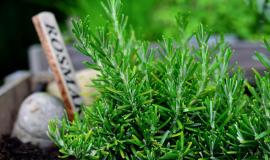
Eucalyptol, also known as 1,8-cineole, is another interesting one. It has a cool, fresh, eucalyptus-like aroma and occurs naturally in plants including eucalyptus, rosemary, sage, and bay leaves.
There is some human research here, which makes eucalyptol particularly interesting compared with many other cannabis terpenes.
One small study involving rosemary aroma found that blood levels of 1,8-cineole were associated with speed and accuracy on cognitive tasks. Other research has looked at rosemary and sustained attention as well.
There is a catch, though: rosemary contains many different compounds, so those results can't automatically be attributed to eucalyptol alone. Other controlled research looking specifically at 1,8-cineole hasn't consistently found improvements in alertness or attention.
In other words, the research is interesting, but it's nowhere near settled.
Limonene
Limonene is one of the easiest terpenes to recognize. It gives cannabis and other plants a bright citrus aroma, with lemon and orange being the most familiar examples.
Limonene doesn't have the same direct connection to focus as pinene or eucalyptol. Research around it has been more interested in areas such as mood, stress, and other biological effects.
That still makes it relevant to the conversation. If someone feels less stressed or distracted, they may find it easier to concentrate, but that's very different from saying limonene directly improves concentration.
In cannabis, limonene contributes citrus, lemon, orange, and generally bright, fresh notes. It's also one of the reasons some limonene-rich cultivars are described by consumers as uplifting or suited to daytime use.
Terpinolene
Terpinolene is a little different. It's less common as a dominant terpene but has a distinctive mix of herbal, floral, pine, and citrus aromas.
Terpinolene-rich cannabis is often described by consumers as energetic, uplifting, or mentally stimulating.
The science doesn't really match the confidence of those descriptions yet.
There isn't strong human evidence showing that terpinolene itself improves focus or concentration. It's better to think of the energetic reputation as a description of how consumers experience certain cannabis products, rather than a proven effect of the terpene.
Focus and Energy Aren't the Same Thing
These words get thrown around together, but they don't mean the same thing.
Energy is about feeling stimulated or less tired.
Alertness means being awake and responsive.
Focus means directing your attention toward something.
Concentration means keeping that attention there.
Memory is about taking in, storing, and retrieving information.
A product can make someone feel energetic without actually making them better at concentrating. Someone might feel more awake and still have trouble staying on task.
That's one reason it's difficult to reduce the cannabis experience to a single terpene or even a single effect label.
What About THC?
This is the part that often gets left out of conversations about “focus terpenes.”
THC can affect working memory, attention, inhibition, and other aspects of cognitive function. Those effects can depend on dose, tolerance, frequency of use, and the individual.
So even if a product has an interesting pinene or eucalyptol profile, that doesn't mean the THC won't affect concentration.
A cannabis product containing pinene doesn't automatically become a concentration aid.
Does Sativa Mean Better Focus?
Not necessarily.
Sativa is often associated with energy, daytime use, creativity, and focus, while indica is commonly associated with relaxation. Those descriptions can be useful as general shorthand, but they're not precise descriptions of a product's chemistry.
Two products labeled as sativa can have very different THC levels, minor cannabinoids, terpene profiles, and ratios of different compounds.
If you're interested in terpene profiles, checking the actual lab results will tell you much more than relying on the sativa label alone.
How to Read a Terpene Profile for Focus
If you're curious about products with fresh, bright, or traditionally “daytime” profiles, look at the whole terpene panel rather than searching for one magic compound.
Pinene may give you pine, resin, and herbal notes.
Limonene brings lemon, orange, and other citrus aromas.
Eucalyptol contributes cool, fresh, eucalyptus-like notes.
Terpinolene can bring floral, herbal, pine, and citrus characteristics.
None of these should be treated as a guaranteed productivity boost. Instead, use the terpene profile as another way to understand the aroma and character of a product and see which profiles you personally prefer.
Terpenes Don't Work Alone
Cannabis contains much more than THC and terpenes. There are also CBD, minor cannabinoids, flavonoids, and other plant compounds.
The overall experience depends on that combination, along with the dose, consumption method, and the individual.
This is part of the reason the idea of the “entourage effect” is so interesting, although research into specific cannabinoid-terpene interactions is still developing. We know these compounds exist together in cannabis, but we don't have a simple formula that tells us exactly how every combination will feel.
The Terpenes to Know
Pinene: Interesting research around memory and learning, but much of the evidence is preclinical. Aroma: pine, resin, herbs.
Eucalyptol: One of the more interesting terpenes when it comes to human cognitive research, although findings are mixed. Aroma: eucalyptus, cooling herbs, freshness.
Limonene: More interesting from a mood and stress perspective than as a direct concentration aid. Aroma: lemon, orange, citrus.
Terpinolene: Frequently associated with energetic cannabis profiles, but direct research on focus is limited. Aroma: floral, pine, citrus, herbs.
Final Thoughts
The idea of a single “focus terpene” is probably too simple.
Pinene has interesting research around memory. Eucalyptol has some of the more interesting human cognitive data. Limonene may be more relevant to mood and stress, while terpinolene has a strong reputation among cannabis consumers despite limited research on concentration itself.
And once these compounds are part of cannabis, THC, other cannabinoids, dose, and individual response all become part of the picture.
For consumers, terpene profiles are still useful — just not as a shortcut to guaranteed effects. They can tell you a lot about how a product smells and tastes, and over time, paying attention to those profiles can help you figure out which types of cannabis you personally enjoy.
Health Disclaimer: The information provided in this article is for educational purposes only and should not be taken as medical advice. Always consult with a qualified healthcare provider before using cannabis, particularly if you have pre-existing conditions or are taking medication.