
Cannabis Concentrates Explained in Plain English
A straightforward guide to wax, rosin, resin, hash, diamonds, and other cannabis extracts.
If you have ever looked at a dispensary menu and wondered what all the concentrate names actually mean, you are not alone.
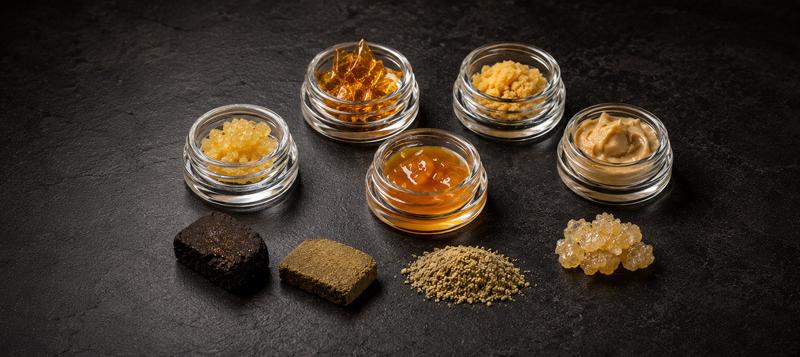
Wax, shatter, live resin, rosin, diamonds, badder, hash, and kief can sound like completely different products. In reality, most fall under the same broad category of cannabis concentrates, also commonly called cannabis extracts.
Once you understand how these products are made and what determines their texture, the concentrate section becomes much easier to navigate.
What Are Cannabis Concentrates and Extracts?
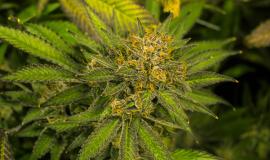
A cannabis concentrate is exactly what it sounds like: a concentrated form of cannabis containing higher levels of cannabinoids and aromatic compounds than traditional flower.
You will hear the terms concentrate and extract used throughout the cannabis industry. They are often used interchangeably, although there is a small technical difference.
An extract is produced by separating compounds from cannabis using a specific extraction process. A concentrate is the broader category and can also include mechanically separated products such as kief and traditional hash.
For everyday shopping purposes, both terms generally refer to products that collect and concentrate the resin-producing parts of the cannabis plant.
Live vs. Cured Concentrates
One of the first distinctions you may see on a menu is whether a cannabis extract is labeled live or cured.
Live concentrates are made from freshly harvested cannabis that is frozen shortly after harvest. This helps preserve more of the plant's original aromatic compounds before extraction.
Cured concentrates, sometimes called non-live concentrates, are made from flower that has gone through the traditional drying and curing process first.
Live extracts are often associated with fresh, expressive aromas, while cured extracts may have deeper or more traditional cannabis notes. Neither method is automatically better. They simply begin with different starting material.
Read the full guide: Live vs. Non-Live Cannabis Concentrates: What's the Difference?
Solvent-Based vs. Solventless Extracts
Cannabis concentrates can also be divided into solvent-based and solventless products.
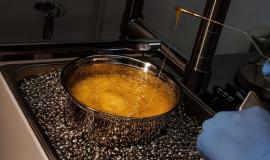
Solvent-based extraction uses substances such as butane, propane, ethanol, or carbon dioxide to separate cannabinoids and terpenes from the plant material. The solvent is then removed during processing.
Solventless concentrates use physical separation methods such as heat, pressure, ice water, agitation, or fine screens. Rosin, bubble hash, dry sift, and kief all fall within the solventless category.
Both methods can produce high-quality concentrates when they are performed correctly and the finished products meet required testing standards.
Read the full guide: Solventless vs. Solvent-Based Extracts: What's the Difference, and Which Is Better?
Concentrate Names Usually Describe One of Three Things
Starting material:
Terms such as live resin and cured resin tell you whether fresh-frozen or dried and cured cannabis was used.
Extraction method:
Terms such as rosin and bubble hash tell you something about how the product was produced.
Texture:
Terms such as wax, sugar, badder, budder, sauce, and shatter primarily describe the concentrate's final consistency.
Wax
Wax is a broad term for cannabis extracts with a soft, opaque, or slightly crumbly texture. Most products sold as wax are made through solvent-based extraction and then processed to create their final consistency.
Unlike transparent shatter, wax usually has a whipped or crystallized appearance. Its texture may range from soft and sticky to dry and easy to break apart.
Common variations include:
- Sugar wax: A grainy concentrate with small crystals suspended in terpene-rich material.
- Crumble: A drier, more brittle variation that can break apart easily.
- Sugar sauce: A wetter concentrate combining crystals with a more fluid sauce.
- Crystalline sugar: A concentrate with a visibly crystallized, granular texture.
These names mainly describe texture. A wax product can also be live or cured depending on the cannabis used to make it.
Read the full guide: What Is Cannabis Wax? Everything You Need to Know
Rosin
Rosin is a solventless cannabis extract made by applying controlled heat and pressure to flower, hash, or another trichome-rich starting material.
The pressure squeezes resinous oils from the material without using butane, propane, or another chemical solvent. The finished product can range from sticky and translucent to creamy, whipped, or sauce-like.
Common types include:
- Live rosin: Usually made from bubble hash produced with fresh-frozen cannabis.
- Cured rosin: Made from dried and cured cannabis or hash.
- Hash rosin: Pressed from hash rather than directly from flower.
- Flower rosin: Pressed directly from cannabis flower.
Hash rosin is often considered more refined than flower rosin because much of the plant material has already been removed before pressing.
Read the full guide: Rosin Types Explained: Live, Cured, Hash, and Flower Rosin
Live Resin
Live resin is a solvent-based extract made from cannabis that is frozen shortly after harvest instead of being dried and cured first.
Using fresh-frozen cannabis helps retain more of the plant's original aromatic profile. This is why live resin is often selected for its pronounced aroma and flavor rather than for texture alone.
Live resin does not have one fixed consistency. It may be sold as sugar, sauce, badder, budder, wax, or diamonds and sauce.
The word live refers to the starting material, while terms such as sugar or badder describe the finished texture.
Read the full guide: Live Resin 101: What Is It and How to Use It?
Shatter
Shatter is a cannabis extract with a firm, glass-like consistency. When it is cool and handled carefully, it may snap into pieces, which is where the name comes from.
Its appearance can range from translucent gold to darker amber depending on the starting material and production process.
Shatter is created by keeping the extracted material relatively undisturbed while it stabilizes. This allows it to form a smooth, uniform sheet instead of developing a whipped or crystallized texture.
Because it is stable and less sticky than sauce, some consumers find it easier to portion and store. Warmer temperatures can make it softer and more difficult to handle.
Read the full guide: Shatter: All You Need to Know About the Beautiful Concentrate
Badder, Budder, and Batter
Badder, budder, and batter are closely related terms for concentrates with a soft, whipped consistency.
Badder and batter are generally compared to cake batter or frosting. Budder is often slightly thicker and smoother, resembling softened butter. In practice, producers and dispensaries do not always use these names in exactly the same way.
The creamy texture is produced by controlling temperature and agitation during processing. This changes the concentrate's physical consistency without necessarily changing its cannabinoid content.
Badder and budder can be made from live resin, cured resin, or rosin, so the texture alone does not tell you whether the product is solvent-based or solventless.
Read the full guide: What Is Budder, Badder, and Batter? A Guide to Cannabis Concentrates
Cannabis Diamonds
Cannabis diamonds are crystalline formations made primarily of THCA. They can appear as tiny grains, larger crystals, or gem-like pieces.
Diamonds develop as THCA separates and crystallizes during controlled processing. On their own, the crystals contain relatively little aroma because many terpenes remain in the liquid portion of the extract.
For that reason, diamonds are commonly combined with terpene-rich sauce. This creates the concentrate style known as diamonds and sauce.
The diamonds provide the crystalline cannabinoid portion, while the surrounding sauce contributes much of the product's aroma, flavor, and consistency.
Read the full guide: Cannabis Diamonds: What They Are, How They're Made, and How to Use Them
Hash
Hash is one of the oldest forms of cannabis concentrate. It is made by collecting the plant's resin glands, called trichomes, and pressing or working them into a solid product.
Traditional hash can be soft and pliable, dry and crumbly, or dense and firm. Its color may range from pale tan to red, brown, or nearly black depending on the material and production method.
Regional traditions have produced distinctive hash styles. Moroccan hash is commonly associated with dry-sifted trichomes that are pressed into blocks, while Lebanese hash is often aged before pressing and may be sold in red or yellow varieties.
Read more:
Bubble Hash
Bubble hash is a solventless extract made with ice water, agitation, and fine mesh filtration bags.
The cold water makes the trichomes brittle, allowing them to separate from the plant material. Bags with progressively smaller mesh sizes then collect different grades of resin.
After collection, the hash must be dried carefully to remove moisture. Finished bubble hash can range from a loose, sandy texture to a soft material that melts almost completely when heated.
The term full melt is generally used for high-grade bubble hash that leaves very little plant residue behind.
Read the full guide: Bubble Hash: The Classic Solventless Extract Explained
Kief
Kief is the loose collection of trichomes that naturally separate from cannabis flower.
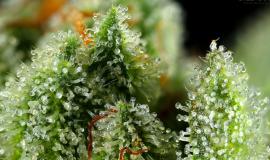
These tiny resin glands contain many of the plant's cannabinoids and aromatic compounds. The powder that collects in the bottom chamber of a multi-piece grinder is a familiar example of kief.
Commercial kief is usually collected by passing dried cannabis across fine screens. It can be sold loose, added to flower, pressed into hash, or used to make infused products.
Kief is one of the simplest concentrates because it requires mechanical separation rather than a chemical extraction process.
Read the full guide: Discover the Wonder of Kief
Moon Rocks and Sun Rocks
Moon rocks combine several cannabis product categories in one item. They are generally made by coating cannabis flower with oil or another concentrate and then covering it in kief.
The result is still built around a whole flower bud, but the added extract and trichomes make it substantially more concentrated than ordinary flower.
Sun rocks follow a similar concept but are usually positioned as a more refined variation. Recipes differ by producer, but sun rocks may use higher-quality flower, a more concentrated extract, or solventless products such as rosin.
Because neither term has one universal manufacturing standard, the ingredients listed on the package are more useful than relying on the name alone.
Read the full guide: What Are Sunrocks and How Are They Different From Moonrocks?
How to Compare Cannabis Concentrates
Look beyond THC:
Potency is only one part of the product. Starting material, terpene profile, extraction method, and freshness can all affect the overall experience.
Check whether it is live or cured:
This tells you whether the producer started with fresh-frozen cannabis or traditionally dried flower.
Identify the extraction method:
Rosin, hash, and kief are solventless, while live resin, wax, shatter, and many diamonds are generally made through solvent-based extraction.
Choose a practical texture:
Shatter is firm, badder is creamy, sugar is grainy, and sauce is fluid. Texture affects handling more than it determines quality.
Final Thoughts
Cannabis concentrates and extracts are easier to understand once you separate the production method from the final texture.
Live resin and cured resin describe the starting material. Rosin, hash, and bubble hash describe how resin was collected. Wax, shatter, sugar, badder, and sauce usually describe how the finished extract looks and handles.
There is no single concentrate that is best for everyone. The right choice depends on whether you care most about aroma, flavor, texture, potency, solventless production, or ease of handling.
Understanding the basic vocabulary makes it much easier to compare products and ask useful questions the next time you browse a concentrate menu.
Health Disclaimer: The information provided in this article is for educational purposes only and should not be taken as medical advice. Always consult with a qualified healthcare provider before using cannabis, particularly if you have pre-existing conditions or are taking medication.