
Medical Marijuana Moves to Schedule III: What It Means
The U.S. government has taken a major step by reclassifying certain marijuana products under federal law.
The U.S. government has taken a major step by reclassifying certain marijuana products under federal law. In a move that had been discussed for years, FDA-approved products containing marijuana and certain products tied to state medical marijuana programs are now being treated differently under the Controlled Substances Act.
This change does not legalize cannabis federally, but it does shift how some marijuana products are viewed and regulated. For the industry, researchers, and patients, it marks one of the most significant federal policy updates in decades.
What Changed
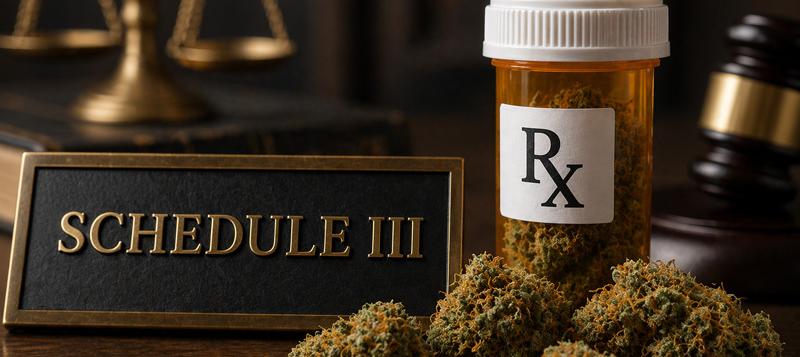
Under the new order, FDA-approved products containing marijuana and certain marijuana products subject to state medical marijuana licenses have been moved from Schedule I to Schedule III under federal law.
Schedule I is reserved for substances considered to have no accepted medical use and a high potential for abuse. Schedule III includes substances recognized as having medical value and a lower potential for abuse. This signals a shift in how the federal government is treating some marijuana-related products, particularly in a medical context.
What This Means for the Cannabis Industry
One of the biggest possible impacts is financial. Businesses operating within state medical marijuana programs may be in a better position to deduct standard business expenses on their federal taxes, something that was generally not allowed under the previous classification.
That said, the effect on adult use cannabis businesses remains unclear. Because the order is tied to FDA-approved products and state medical marijuana licenses, additional federal guidance may be needed before the full business impact is understood.
Research and Medical Use
The new classification is expected to reduce barriers to marijuana research. Scientists and institutions may have an easier path to study qualifying marijuana products, including their safety and potential medical applications.
This could support more consistent data and better informed healthcare discussions over time. It may also help expand research opportunities that were more difficult under Schedule I restrictions.
What Doesn’t Change
Despite the shift, marijuana is still not federally legal across the board. Adult use marijuana remains illegal at the federal level, and state laws still control how cannabis is produced, sold, and used within individual markets.
The order also does not automatically open interstate commerce or fully resolve banking issues for the cannabis industry. Many federal and state regulatory limits still remain in place.
How This Fits Into the Bigger Picture
This change reflects the reality that many U.S. states already allow some form of marijuana use, especially for medical purposes. Federal policy has lagged behind state level laws for years, and this order brings federal treatment slightly closer to that reality in a limited way.
At the same time, it is not the same as full federal legalization or a blanket rescheduling of all cannabis products. The scope is narrower, which is why the details matter.
What Happens Next
This reclassification is a major step, but it does not settle every open question. Additional guidance, legal interpretation, and possible future policy changes could affect how the order is applied in practice.
There are still broader discussions about whether marijuana could be further rescheduled or regulated differently in the future, especially beyond the medical category covered here.
Final Thoughts
The federal government’s decision to move certain marijuana products into Schedule III marks a meaningful shift, especially for medical programs and research. But it does not rewrite the full rulebook for the cannabis industry.
For now, it is best understood as a significant but limited policy change, not a full federal legalization of marijuana.